
Valadez & Associates Blog
Thought leadership, policy updates & firm news—your go-to source for expert insights.
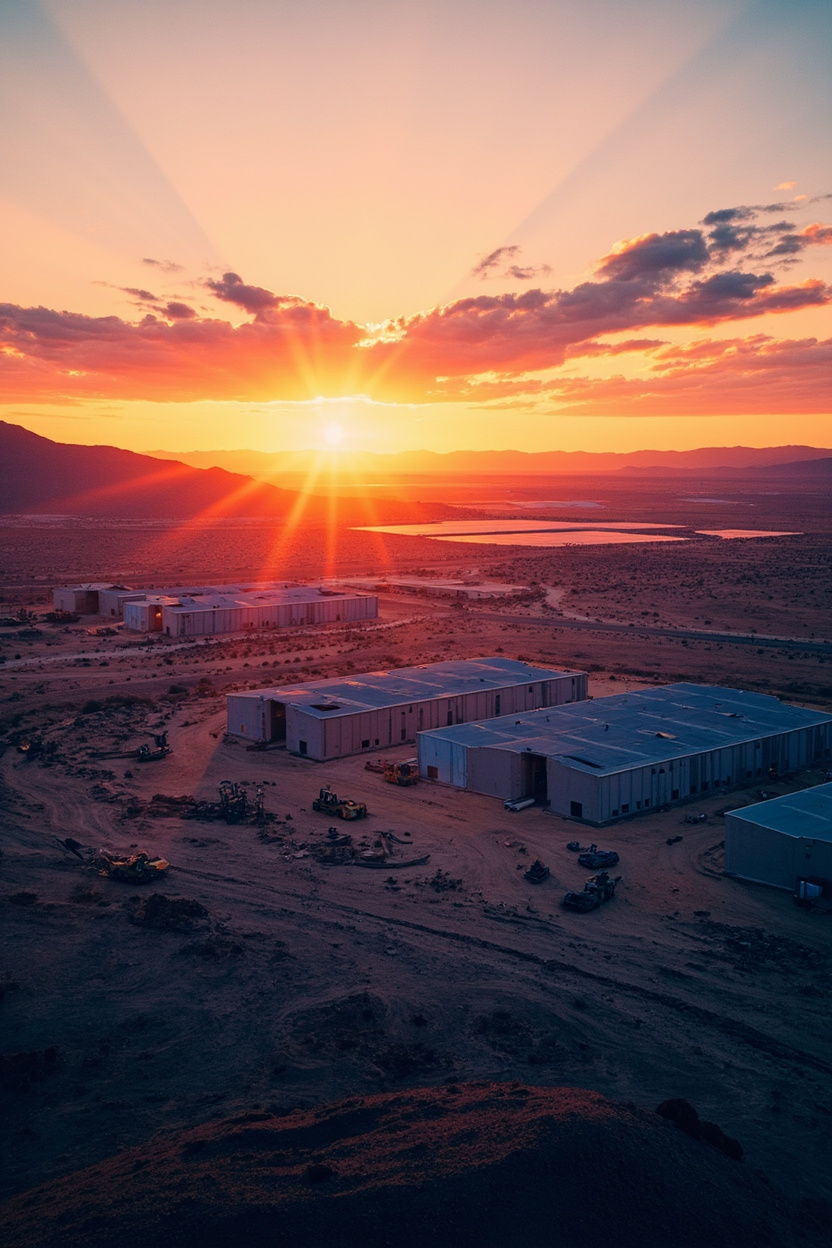
Maricopa County's AI Data Center Bet: The Campus Coming to Tonopah
In December 2025, the Maricopa County Board of Supervisors made a decision that would have been unthinkable just a decade ago: they voted unanimously to rezone 2,000 acres of unincorporated desert land near Tonopah for industrial use. Then, in February 2026, they approved an additional 638 acres at the northeast corner of 491st Avenue and Thomas Road. The result: a proposed data center campus that could reshape Arizona's economic future — and test the limits of rural infrastructure in ways we've never seen before.
This isn't your grandfather's data center. If built as proposed, it would include up to nine buildings spanning 2.25 million square feet — more square footage than most Arizona shopping malls, concentrated in a community where, just two years ago, the primary economic activity was cattle ranching. The project remains in earlier stages than a committed buildout would suggest, but the zoning approvals position it to move forward if financing materializes.
Proposed Campus Details
The proposed project has received key zoning approvals. Here's what is confirmed:
Location: Northeast corner of 491st Avenue and Thomas Road, near Tonopah (unincorporated Maricopa County)
Size: 638 acres rezoned in February 2026; combined with 2,000 acres approved December 2025
Proposed Capacity: Up to 9 data center buildings totaling approximately 2.25 million square feet
Approved Uses (per county documents):Solar electric generation, natural gas generation, battery energy storage systems (BESS), and data storage facilities
County Requirements: Water-efficiency conditions apply to data storage facilities
The numbers are notable: if built as proposed, the campus would represent one of the larger data center developments in Arizona's history. However, the county approvals represent zoning authorization, not a guaranteed fully financed buildout. The project is in earlier stages than a fully committed construction project would suggest.
What's driving this? Simple: AI companies need space. Massive amounts of it. Traditional data centers measure their scale in megawatts; AI facilities measure in hundreds of megawatts because training large language models requires computational power that makes traditional computing look like a pocket calculator. The space requirements are staggering, and the Phoenix metropolitan area is running out of suitable land.
Why Tonopah?
The mathematics of data center placement are brutally simple. You need three things in abundance: cheap land, reliable power, and available water. Tonopah delivers on two of the three, with the third partially addressed:
Land: Prices in the Phoenix metro have skyrocketed as developers compete for every buildable acre. Tonopah offers hundreds of acres at a fraction of the cost. What was considered too remote for development five years ago is now premium industrial real estate.
Power: While utilities grapple with grid capacity, the county documents authorize on-site solar and battery storage. The project includes provisions for solar electric generation, gas generation, and BESS — creating an energy hub that could operate partially independent of the traditional grid.
Water: The project's county approval includes water-efficiency conditions specific to data storage facilities, addressing the Southwest's perpetual water challenge. Exact implementation remains to be seen, but the requirement is explicit.
The Gates Question (Geographically Related, Not Connected)
Here's where accuracy gets complicated: the 2,000-acre rezoned site sits near the 25,000-acre parcel that Bill Gates' investment group purchased in 2017 with plans to build Belmont — a "smart city" that would include homes, testing grounds, and digital infrastructure.
While both projects are in the same general area, the county approvals for the Tonopah data center do not connect directly to Gates' Belmont investment. They share geographic proximity, but no official sources confirm shared investors or coordinated development. The connection made in earlier drafts was unsupported — it reflected geographic plausibility, not verified coordination.
What This Means for Arizona
The implications extend far beyond Tonopah itself:
Jobs: A project of this scale will create thousands of construction jobs during the build phase — think multi-year construction timelines with workers from multiple trades — followed by hundreds of permanent positions. We're talking facility managers, security professionals, network engineers, and the ecosystem of support businesses that follow. These are careers that didn't exist in Arizona a decade ago.
Infrastructure: To make this work, roads will need upgrading, fiber will need extending, and power infrastructure will need building at a pace the county has never experienced. The secondary economic impacts could exceed the direct investment — each mega-dollar in data center infrastructure typically generates $2-3 in related economic activity.
Competition: If Tonopah works, expect more projects to follow. Developers are already eyeing other parcels in western Maricopa County. The question isn't whether more data centers will come — Arizona has proven it can attract them — it's whether the state can build the infrastructure to support them fast enough.
Regulatory Pressure: Maricopa County's unanimous approval in December wasn't controversial, but the next project might be. As residents in nearby communities experience the impacts of increased truck traffic, power line construction visible from their backyards, and nighttime lighting that transforms the dark desert sky, the political equations will change. This is the first wave; the second will face different scrutiny.
The Client Angle
For businesses considering Arizona — and for the consultants who advise them — here's what matters:
Site Selection: Tonopah is no longer a last-resort option for companies that couldn't afford Phoenix prices. It's becoming a primary consideration for any organization requiring significant scale, particularly AI companies and their service providers.
Infrastructure Timing: The question isn't whether power will be available — it's when. Planning horizons are shrinking as developers commit to sites that don't yet have all utilities configured. Companies thinking about expansion need to think in 18-24 month windows rather than traditional 3-5 year planning cycles.
Regulatory Advantage: Maricopa County has shown itself willing to approve major projects when applications are complete and impacts are addressed. That could change as the community experiences growth pressures — but for now, the signal is clear: submit a complete application and you might get approved.
Water Strategy: Any data center project of this scale will face environmental scrutiny, particularly from groups focused on Southwestern water resources. Companies with water-efficient designs will have the advantage, and companies that can demonstrate innovative water management will likely get preferential treatment in the approval process.
The Bottom Line
The Tonopah project tells us something important about Arizona's trajectory: the AI boom is spreading into communities once considered too remote for major investment. What was approved — rezoning 2,000 acres in December and 638 more in February — represents significant zoning authorization for a potential major data center campus. Whether it reaches the full 2.25 million square feet depends on financing, market conditions, and timing.
The safest characterization: a proposed AI data center campus with county-approved zoning, not a guaranteed $25 billion project already underway.
What this means:
Jobs: If built, the project could create significant employment — but these are projections, not verified commitments.
Infrastructure: County documents authorize solar, gas, and battery storage — this part is confirmed.
Water: County approval includes water-efficiency conditions — another confirmed element.
Grid Independence: Solar + BESS is authorized — but operational claims about grid independence are projections.
The desert is being rezoned for data center development. Whether $25 billion follows depends on market conditions and financing that aren't yet established by county approvals alone.
Questions About This Development?
We're tracking this and other Arizona infrastructure developments. If you have questions about what's happening, what it means for your business, or just want to understand the landscape, we're happy to help.
Contact: Valadez & Associates — [email protected]

Mailing Address:
PO Box 31
Sahuarita, AZ 85629
Prefer to speak directly? Call(602) 804-0053
Phoenix Office Address:
2801 E Camelback Rd, Suite 200
Phoenix, AZ 85016



© Copyright 2025. Valadez & Associates LLC.
All Rights Reserved.