
Valadez & Associates Blog
Thought leadership, policy updates & firm news—your go-to source for expert insights.
TSMC's Arizona Bet: What the Operational Progress Means for the Supply Chain
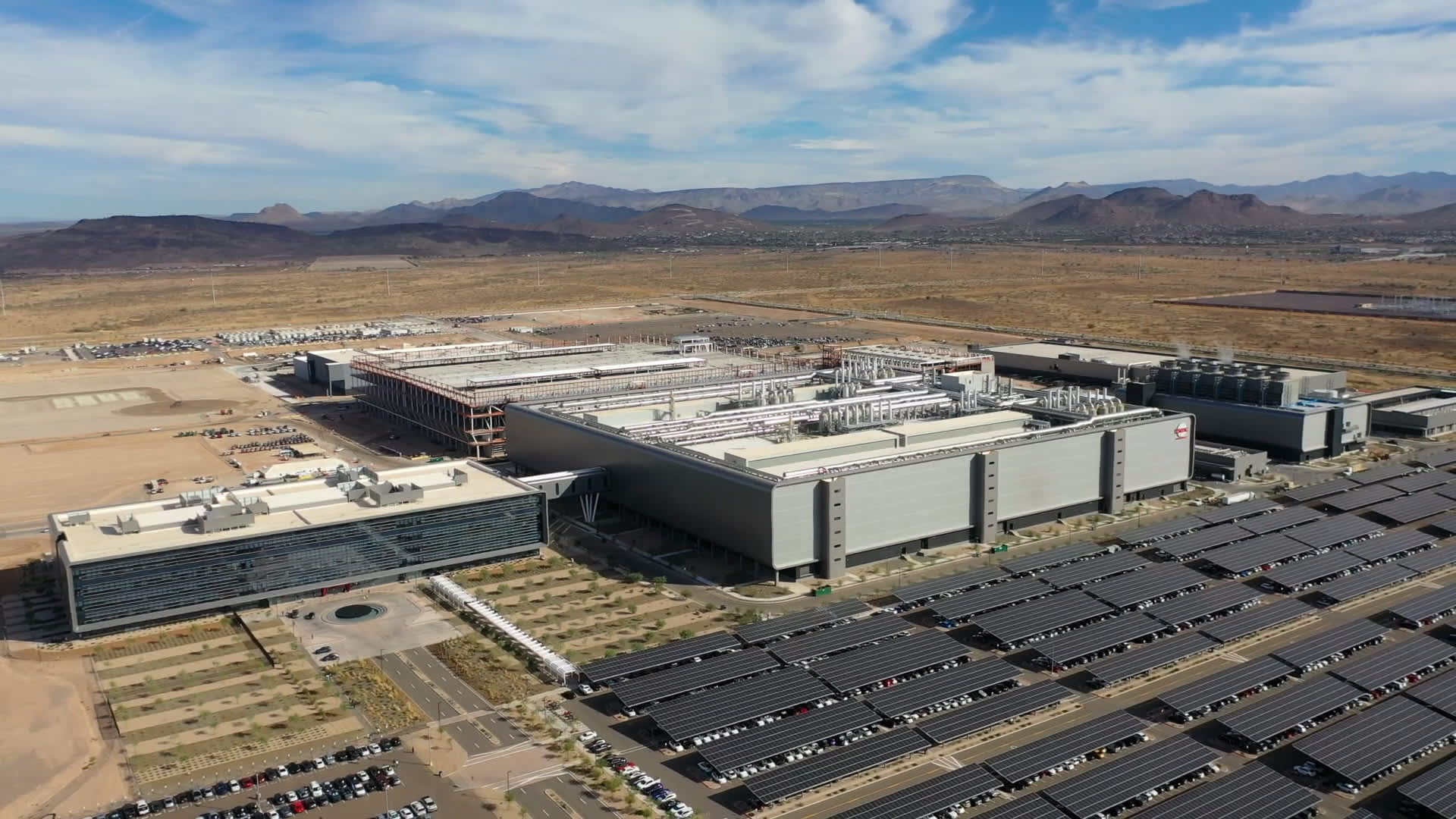
TSMC's overall profitability remains strong, and its Arizona fabrication facility is making significant operational progress—volume production of 3nm chips advancing, Apple orders increasing, and $100 billion in additional investment pledged. That's a big deal—not just for the company, but for Arizona's aspirations as a semiconductor hub.
Why it matters now: For years, skeptics questioned whether advanced chip manufacturing could work profitably in the United States. The cost differentials were staggering—construction costs 4-5x higher than Taiwan, trained workforce shortages, regulatory complexity. TSMC's Arizona bet looked like a political gesture as much as a business decision.
The operational progress—accelerated timelines, major customer commitments, expanded investment—changes the conversation. This isn't welfare; it's working.
The journey wasn't straight: Let's be clear about what TSMC has navigated to get here. In December 2022, TSMC itself acknowledged it was running into major cost issues. The company publicly stated that construction costs in the U.S. were four to five times what an identical plant would cost in Taiwan. Beyond costs, finding qualified personnel proved difficult—TSMC had to hire American workers and send them to Taiwan for 12-18 months of intensive training. The U.S. Commerce Department's $6.6 billion in direct funding and up to $5 billion in loans under the CHIPS and Science Act helped, but the private sector commitment came first.
Those challenges haven't disappeared—they've been managed. And that's the lesson.
The Apple factor: Apple has significantly increased orders for chips produced at TSMC's Arizona facility. The expanded orders focus on cutting-edge processors for Apple devices—specifically the A16 (used in recent iPhone models), Apple S9 (Watch), and AMD Ryzen 9000 processors. This isn't marginal capacity—it represents meaningful volume commitment from a major anchor customer.
More notably, Apple's willingness to anchor production with Arizona-sourced chips signals a broader shift in supply chain strategy. The company isn't just using Arizona as a backup location—it's making it a meaningful node in its manufacturing network.
The timeline acceleration: TSMC announced in January 2026 that volume production of 3nm chips at its second Arizona fab would start in the second half of 2027—earlier than previously projected. Combined with the July 2025 announcement of an additional $100 billion investment across its U.S. operations, the Arizona fabs represent a significant share of TSMC's domestic expansion.
The original timeline had first production beginning in 2024, then slipping. The current acceleration suggests TSMC has solved—or at least managed—the early-stage problems that caused those delays.
Beyond TSMC—the ecosystem effect: Surrounding the TSMC facilities, mixed-use development is accelerating—restaurants, hotels, housing, and technology parks are planned or underway. The region is fostering supply chain and innovative development modeled after Hsinchu Science Park in Taiwan—that's the ecosystem that turned a semiconductor factory into an economic engine over 30+ years.
Arizona is trying to compress that timeline. Whether it can remains to be seen, but the investment decisions suggest confidence.
What this means for Arizona:
Workforce: The 1,900 direct jobs are just the start. The ecosystem creates thousands more in construction, services, and supply chain. But here's the tension: Intel faced delays in Ohio partly due to a lack of skilled workers. Arizona will face the same challenge. Workforce development isn't a nice-to-have—it's a prerequisite for the promises to materialize.
Real estate: Industrial and commercial development around north Phoenix is accelerating. Land values in the corridor are already reflecting the shift. Companies in the supply chain ecosystem—equipment vendors, chemical suppliers, logistics providers—are positioning nearby.
Infrastructure: Power, water, and transportation investments are being made at scale. Grid capacity remains a real constraint for large-scale projects. SRP is expanding infrastructure to keep pace, but the relationship between demand and supply is tight.
Credibility: Arizona is no longer a promising location—it's proven. The "Silicon Desert" narrative has moved from marketing to reality.
The competitive landscape: TSMC isn't alone in Arizona. Intel continues its own Arizona investments, though with delays. The question is whether Arizona can capture a meaningful share of domestic chip manufacturing or whether Texas and Ohio will compete effectively. The current evidence suggests Arizona has a lead, but the race is far from over.
The service connection: For Valadez & Associates clients evaluating Arizona opportunities—particularly in advanced manufacturing, industrial real estate, or infrastructure—the TSMC story validates the market. Companies considering Arizona can now point to a functioning, operational example rather than just promises.
But here's the strategic reality: the opportunity window is narrowing. As the ecosystem matures, the advantages of early positioning diminish. Companies that establish relationships, understand the permitting landscape, and build workforce pipelines now will have structural advantages over those who wait.
The question is no longer whether Arizona can support advanced manufacturing. The question is whether your business can get positioned before the wave arrives.
Valadez & Associates provides government relations, public affairs, and business development services for companies navigating Arizona's evolving

Mailing Address:
PO Box 31
Sahuarita, AZ 85629
Prefer to speak directly? Call(602) 804-0053
Phoenix Office Address:
2801 E Camelback Rd, Suite 200
Phoenix, AZ 85016



© Copyright 2025. Valadez & Associates LLC.
All Rights Reserved.