Valadez & Associates Blog
Thought leadership, policy updates & firm news—your go-to source for expert insights.
Arizona’s $34 Billion Question: The Reality Behind the Headline (Part 1 of 2)
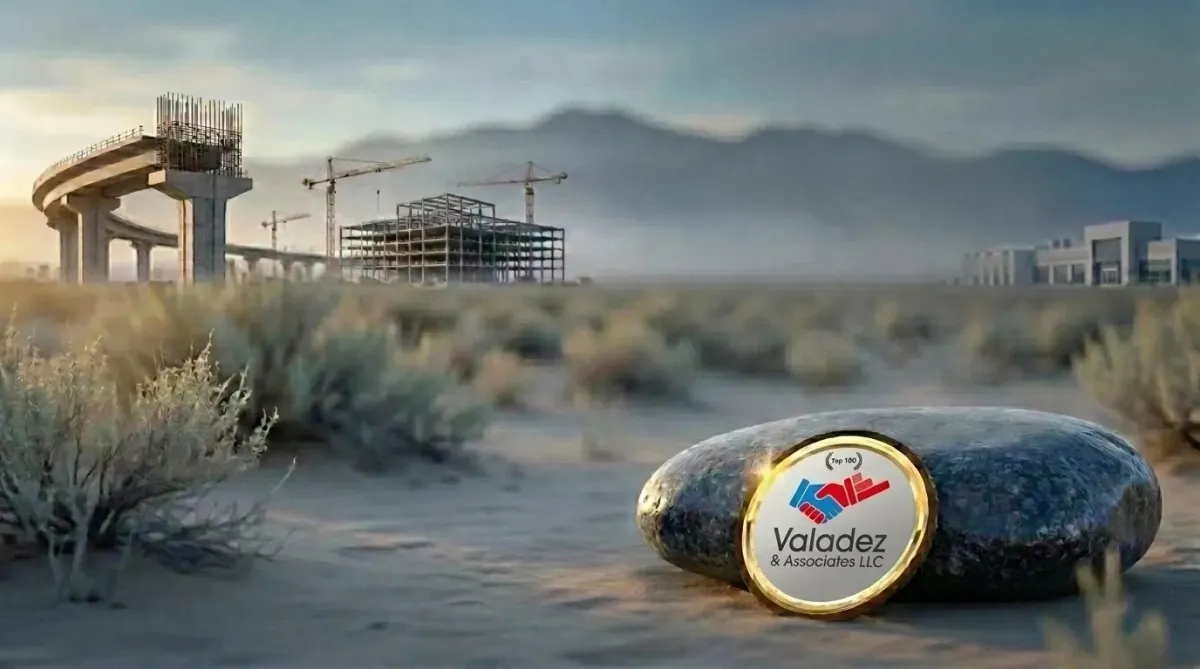
Arizona didn’t just have a good investment year. It had one of the largest investment years in state history. According to ACA and regional reporting, Arizona saw roughly $34 billion in announced projects in 2025. It’s a figure that signals a tectonic shift in the American West, positioning our state as a global competitor in the most critical industries of the 21st century.
But here is the mentor-to-mentee truth: there is a significant distance between a "Grand Opening" banner and a business that actually functions.
Think of this $34 billion headline like a massive new supermarket opening in your neighborhood. The banner is up, the lights are on, and the parking lot is full. But for that store to survive long-term, it needs stocked shelves, moving checkout lines, and a supply chain that actually reaches the loading dock. In the business world, the "announcement" is the banner. The "execution": permitting, infrastructure, and workforce: is the actual work of running the store. In other words, these figures represent announced investments, not fully deployed capital. In Arizona’s current cycle, there is a meaningful lag between announced, under-construction, and fully operational projects—a gap where strategic planning is most critical.
If you are a business leader or entrepreneur, your job isn't to marvel at the $34 billion. Your job is to understand the gap between the headline and the ground reality so you can capitalize on the momentum before the opportunity window closes.
The Pillars of the 2025 Surge
To understand where the money is going, we have to look at the sectors driving the velocity. This isn't just about general growth; it's about high-spec, high-stakes industrial development.
Semiconductors: This remains the crown jewel. With dozens of industry expansions since 2020, Arizona is now one of the nation’s leading semiconductor hubs. That makes the Arizona semiconductor industry one of the central drivers of broader Arizona economic development. TSMC’s massive $65 billion commitment is the anchor, but 2025 saw the "ripple effect" take hold with groundbreakings like Amkor’s advanced packaging facility in Peoria, representing a multi-billion-dollar investment with long-term expansion potential.
Electric Vehicles & Batteries: The advanced manufacturing corridor between Phoenix and Tucson is no longer a concept; it’s a reality. Billions are flowing into new facilities that are reshaping regional logistics and creating a permanent manufacturing base that didn't exist a decade ago, including major investments like LG Energy Solution’s battery facility in Queen Creek.
Aerospace and Defense: This sector received a strategic shot in the arm through increased state focus on defense innovation and public-private coordination. That broader alignment is helping bridge the gap between defense contractors and academia to ensure Arizona remains a national security leader.
Data Centers: The trajectory is explosive, particularly as AI demand hits a fever pitch. However, this growth is increasingly clashing with national questions about power grids and water allocation. As we’ve noted in our look at the Tonopah data center surge, where you build is now just as important as what you build.

Where the Headline Meets the Bottleneck
While the volume of investment is staggering, the velocity of these projects is not uniform. If you are planning an expansion or a new venture, you must account for the "Execution Gap."
1. Infrastructure Strain is Real
Power availability and water allocation are no longer "box-checking" items; they are the primary hurdles. Transportation corridors are being pushed to their limits. In my experience, the businesses that succeed are those that factor these constraints into their pro-forma from day one, rather than waiting for a surprise from a utility provider. For anyone tracking Arizona infrastructure projects, that reality is no longer theoretical; it is operational.
2. The Permitting Pipeline
With $34 billion in projects on the table, municipal and state permitting offices are under significant and growing pressure. A "standard" timeline today may look very different six months from now. Understanding the complex government landscape is the difference between breaking ground in Q3 or watching your capital sit idle until next year.
3. Workforce as the True Constraint
Every major announcement shares a common bottleneck: the skilled workforce. We are in a race to build talent pipelines as fast as we build factories. If you aren't already partnering with educational institutions or investing in internal training, you are already behind.
In Part 2 of this series, we will move from the bottlenecks to the blueprints, breaking down the specific playbook for every leader—from small business owners to global CEOs.

Mailing Address:
PO Box 31
Sahuarita, AZ 85629
Prefer to speak directly? Call(602) 804-0053
Phoenix Office Address:
2801 E Camelback Rd, Suite 200
Phoenix, AZ 85016



© Copyright 2025. Valadez & Associates LLC.
All Rights Reserved.