Valadez & Associates Blog
Thought leadership, policy updates & firm news—your go-to source for expert insights.
Pima FIT Lab: Arizona's Workforce Future Takes Shape
Arizona just made a significant bet on workforce development — and it happened in Tucson, not Phoenix.
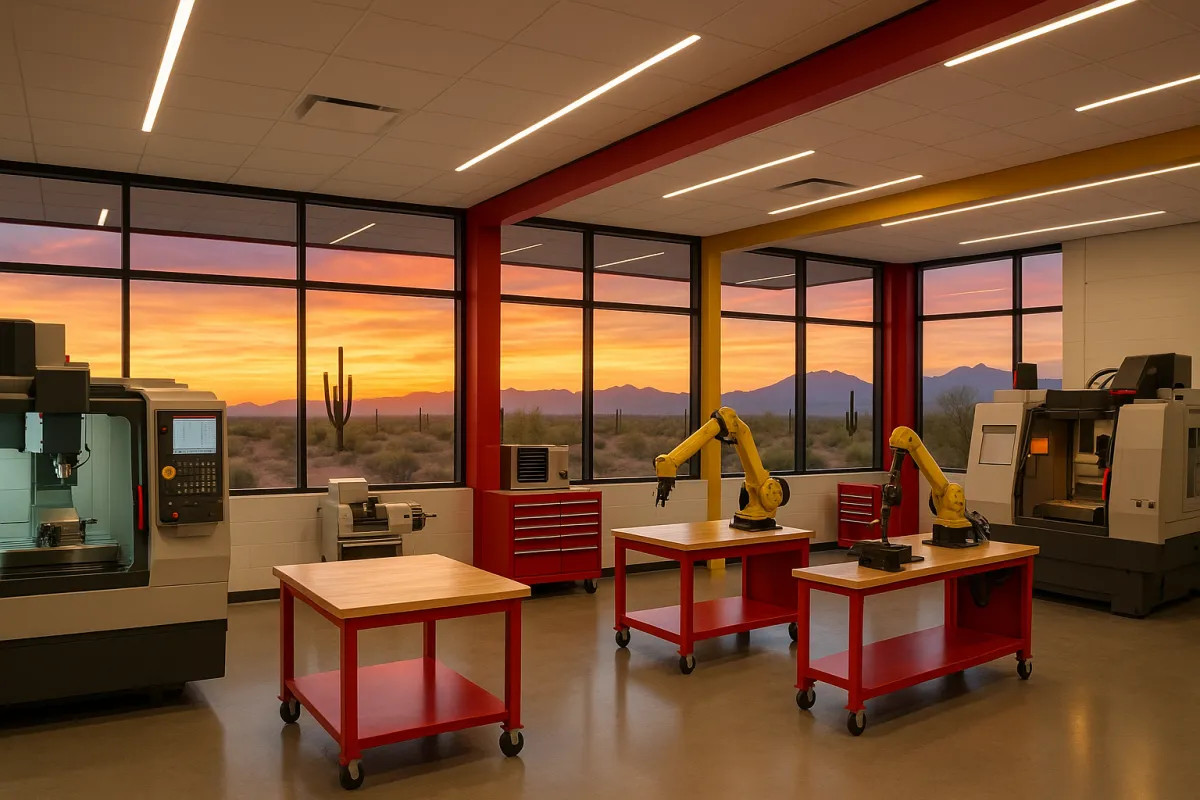
On March 19, 2026, Governor Katie Hobbs joined Pima Community College leaders to celebrate the opening of the Advanced Manufacturing Flexible Industry Training (FIT) Lab. It's a 10,000-square-foot facility within Pima's Advanced Manufacturing Building at the Downtown Campus, designed to produce skilled workers in advanced manufacturing, automation, robotics, and related skilled trades.
But here's what most observers are missing: This isn't just a local initiative. It's a state-backed strategic investment through the Future48 Workforce Accelerator, and it's happening at a critical moment for Arizona's economy.
The Scale of the Investment
The FIT Lab isn't a modest training center. The numbers tell the story:
10,000 square feetof purpose-built training space within the Advanced Manufacturing Building
Hands-on equipmentmatching what local manufacturers actually use
Industry-aligned curriculumdeveloped in partnership with employers
Future48 Workforce Accelerator funding— $3.2 million from the Arizona Commerce Authority, not just local
The message from the state is clear: Southern Arizona's workforce pipeline is a strategic priority, not an afterthought.
Why This Matters Now
Three converging factors make this timing significant:
1. Arizona's Competitiveness Gap
The ArizonaW1NS competitiveness playbook, released in March 2026, identifies workforce as one of the state's critical bottlenecks. The playbook identifies more than 50 actionable strategies across business climate, workforce, energy, water, infrastructure, and innovation.
The FIT Lab is one concrete implementation of that strategy — but it's just the beginning.
2. Major Project Demand
Arizona's construction pipeline includes large-scale, multi-billion-dollar investments across semiconductor fabs, data centers, power plants, and infrastructure. Every one of those projects needs skilled workers — not just engineers, but electricians, welders, HVAC technicians, and industrial maintenance professionals.
3. Geographic Balance
Much of Arizona's recent high-profile workforce investment has centered on the Phoenix metro area. The Pima County investment represents a deliberate effort to distribute workforce development across the state — which matters for regional economic balance and talent retention.
Why This Matters for Arizona's Economic Development
For Arizona's economic development ecosystem, the FIT Lab represents a significant piece of the workforce infrastructure puzzle:
Talent pipeline alignment— connecting training directly to employer hiring needs
Regional capacity building— extending advanced manufacturing workforce beyond Phoenix
Public-private partnership model— ACA funding + community college + employer input
Competitiveness messaging— ArizonaW1NS strategy made tangible at the regional level
This is exactly the kind of infrastructure that site selectors and expanding companies look for when evaluating Arizona as a destination for capital investment.
What's Missing from the Headlines
The FIT Lab announcement received coverage, but several angles deserve more attention:
It's employer-driven, not just educator-designed.The curriculum was developed with input from local manufacturers — that's a critical distinction from traditional training programs that don't align with actual hiring needs.
Flexible, employer-driven training.Like other Future48 sites, the model emphasizes flexible training formats, rather than traditional semester-only programs.
Phoenix isn't the only game in town.Southern Arizona has been historically underserved in workforce investment. The state is signaling that geographic distribution matters through the Future48 network, which includes facilities in Kingman, Yuma, Casa Grande, Mesa, Apache Junction, and Phoenix.
The Real Question
Is one facility enough?
ArizonaW1NS underscores that the state must significantly expand its skilled workforce annually to sustain current growth. The FIT Lab is designed to train significant cohorts of workers each year. The math suggests this is a necessary but not sufficient investment.
The follow-up question: Will the state expand this model to other regions, or will this remain a single flagship demonstration?
Conclusion
The Pima FIT Lab represents something that doesn't get enough attention in Arizona's growth story: infrastructure for human capital, not just physical infrastructure.

Mailing Address:
PO Box 31
Sahuarita, AZ 85629
Prefer to speak directly? Call(602) 804-0053
Phoenix Office Address:
2801 E Camelback Rd, Suite 200
Phoenix, AZ 85016



© Copyright 2025. Valadez & Associates LLC.
All Rights Reserved.